
Auckland Council will begin a new island-wide survey of kauri dieback on Great Barrier this summer, aiming to map how far the disease has spread and establish a baseline for future management.
Council’s Senior Plant Pathogens Advisor, Shannon Hunter, told the Barrier Times the project will run until April 2026 and will involve on-the-ground inspection and soil testing of 540 kauri trees across the island. The work is being carried out with the Department of Conservation and the Ngāti Rehua Ngātiwai ki Aotea Trust.

“Kauri dieback is caused by the soil-borne pathogen Phytophthora agathidicida,” Hunter said. “It infects kauri through their roots, restricts their ability to transport water and nutrients, and eventually kills the tree. The primary aim of this survey is to investigate the extent of the pathogen and assess affected kauri across forested areas on the island.”
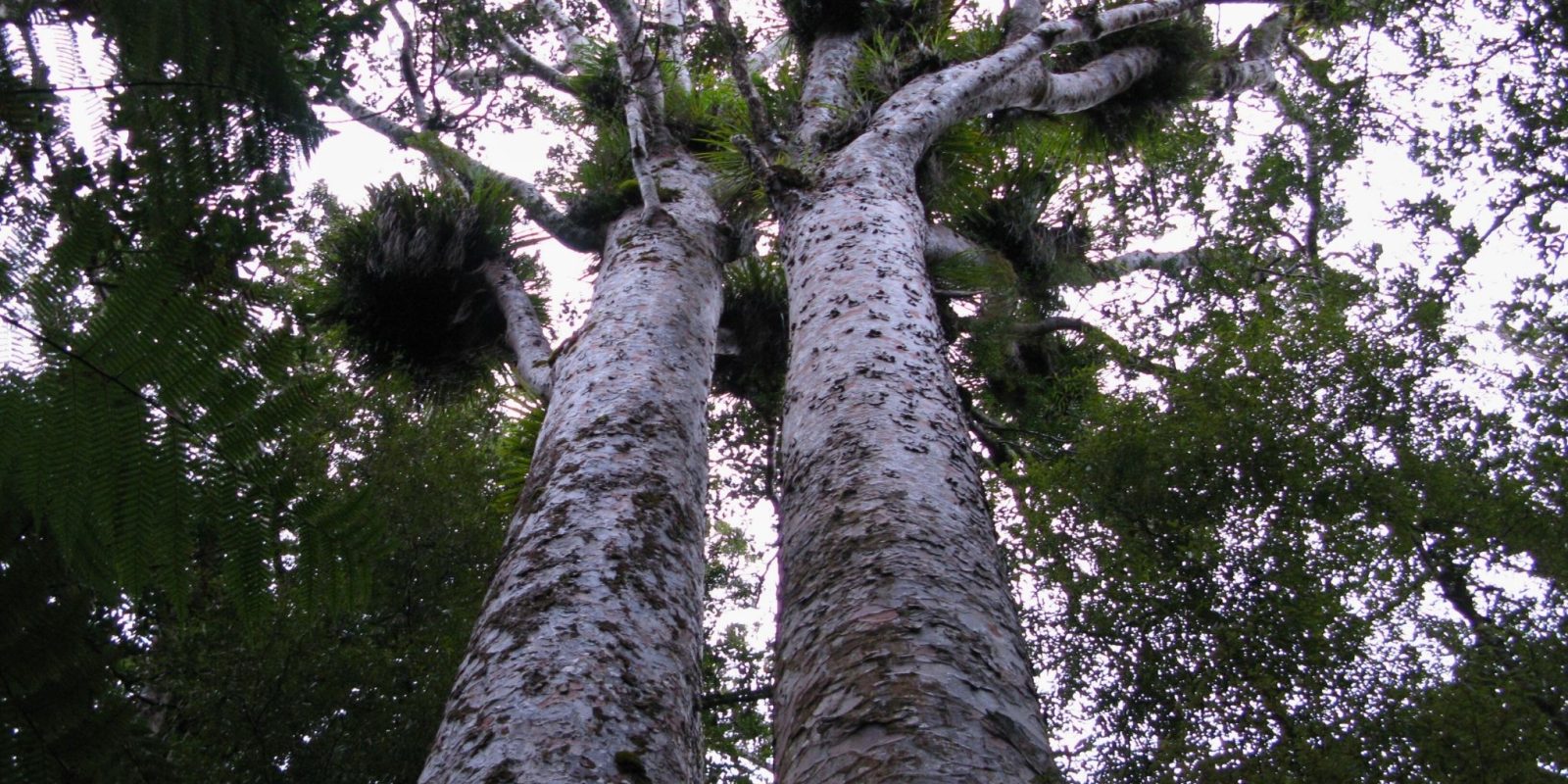
Native Kauri is one of New Zealand’s most iconic trees. As a species, mature kauri can live for over a thousand years, grow to more than 50 metres tall, and attain trunk girths of several metres. They are one of the largest and longest-living trees in the world. The 540 trees were randomly selected to give what Hunter described as a representative picture of the island’s overall kauri population.
Field teams will record canopy colour, canopy thinning, trunk lesions and other visible symptoms, along with general ecological conditions around each tree. Soil will also be collected from the root zone and tested in a laboratory for the presence of the dieback pathogen.

Dieback has already taken a heavy toll in some regions. The pathogen Phytophthora agathidicida has been found in Northland, the Coromandel Peninsula, as well as Aotea, and other kauri zones. There is no known cure. Once infected, nearly all kauri eventually die. Previous national responses have included walking-track closures, upgraded boardwalks to prevent soil movement, and mandatory cleaning stations.
Hunter said the island was specifically chosen for a full survey because dieback has a long history there. “Great Barrier Island was the first place where Phytophthora agathidicida was detected, in 1972,” she said. “It has been surveyed several times since, most recently by Auckland Council in 2020 using a helicopter aerial survey and limited ground observations. This new work will give us a clearer understanding of where the pathogen is present today.”
Part of the sample falls on private land. Hunter said landowners are being contacted directly. “Landowners are being asked for permission to access the selected trees,” she said. “They can opt out if they choose. Those who take part will receive their lab results as soon as they are available. If any private-land trees test positive, we will offer management advice and support, but we will not release any information publicly without landowner permission.”
Aerial imagery will again be used for mapping tree locations and planning fieldwork, but all health assessments are being done in person.
The results will shape future protection measures for the island. “This survey will allow us to build a reliable baseline for kauri health and disease distribution,” Hunter said. “That will inform management decisions for Great Barrier Island over the coming years.” The findings will be released publicly in a report once the analysis is complete.
A community meeting on the survey was held at the Claris Conference Centre on 26 November, which officials say was well-received.