
After years researching Fanny Osborne’s life, Kate Waterhouse still finds it hard to understand how the acclaimed botanical artist “fell off the landscape”.
That said, the writer and curator hadn’t heard of Osborne herself until her Australian mother-in-law – a fan of female botanical artists – mentioned flying in to see an Osborne exhibition in Auckland.

Intrigued, Waterhouse investigated the woman behind the beautiful watercolour works and discovered she’d raised 13 kids without electricity on Great Barrier Island: “I was like, ‘Holy crap. How on earth did she do that there?'”
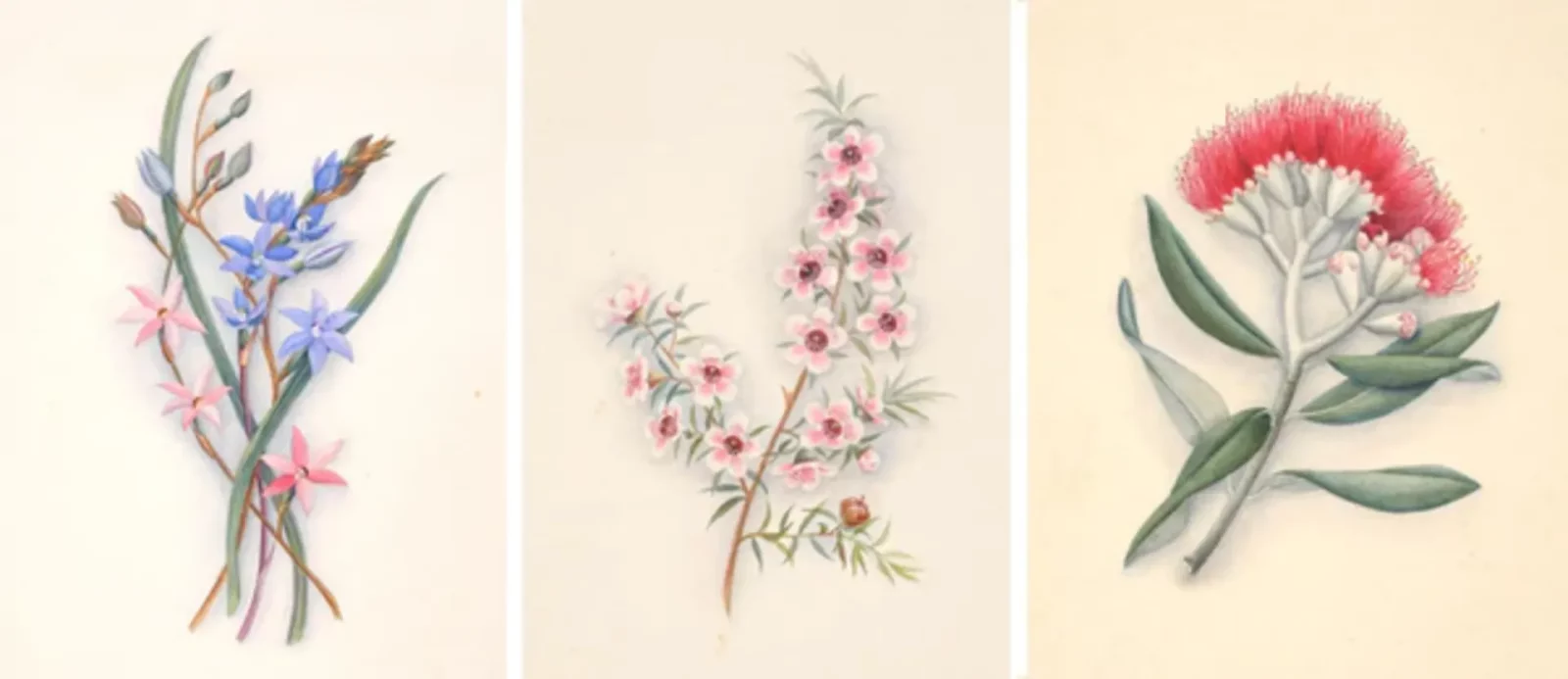
Fanny Osborne was born in 1852 and her beautiful botanical illustrations feature some rare native plants, including one that is now extinct.
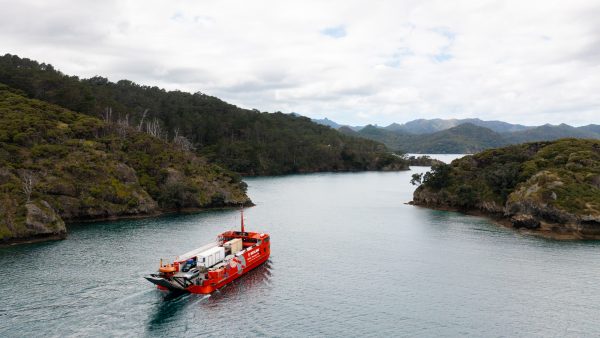
Osborne was one of 13 children herself. At six, she moved with her family to Tryphena in the south of Great Barrier Island, later marrying the “very artistic” AJ Osborne, an amateur botanist who was instrumental in getting the Tryphena School built.

Remnants of their family’s “fairly legendary” garden – once home to exotic plants including waterlilies and a little irrigation system – can still be seen on Rosalie Bay Road, Waterhouse says.
Most likely, Osborne really got into her painting after all of her children were past babyhood, she guesses. A family member told her the artist didn’t like anybody nearby when she painted.
“I only have three children. If she had 13, and then she’s just trying to paint, can you imagine? Like, you would not be polite. You would be like, ‘Talk to the hand out of here. This is my time. I’m doing the thing’.
“Before the war, that’s when she probably hit her straps, and that’s when she became really well known. She was on the cover of the Weekly News, which was like TikTok in 1906.
“But she obviously had the talent and the skill by then, because you wouldn’t just suddenly start being that good at the age of 50.
“By the time the oldest children were getting towards school age, that’s when we saw the big lift in her productivity.”
Osborne lived on Great Barrier Island until arthritis forced her to leave at 81, Waterhouse says. After she died in Auckland three years later, she was buried back on the island.
After presenting Osborne’s story in her academic dissertation, Waterhouse will tell the artist’s story more fully in an upcoming book.
She also hopes there’ll be a reprint of Jean Goulding’s “absolutely gorgeous” 1983 book Fanny Osborne’s Flower Paintings, with a “more accurate” biographical note.
Half of the 54 flowering plants that appear in that book Waterhouse says she’s never seen on her own frequent bush walks on Great Barrier Island.
“It’s like a window into the beauty of the forests of old New Zealand before the impact of colonisation.”
Looking at the native flowering plants of Great Barrier that Osborne depicted in her watercolours, the now-extinct Adams mistletoe is most historically significant.
But the fact that so many of the others are no longer seen on the island is a powerful message about the effects of deforestation, cattle, goats and rats on the forest system, Waterhouse says.
“Everyone’s excited about Predator Free 2050 and all of this, but when you think of how the bush was and how Māori used the bush, it was a library, it was a medicine cabinet. It is deeply culturally, spiritually rich.
“It isn’t all about the birds. It’s actually about the forest, the ngāhere, and what it’s done for us and what it does for everything else that lives there. She gives us a window into that, a beautiful window.”
-RNZ