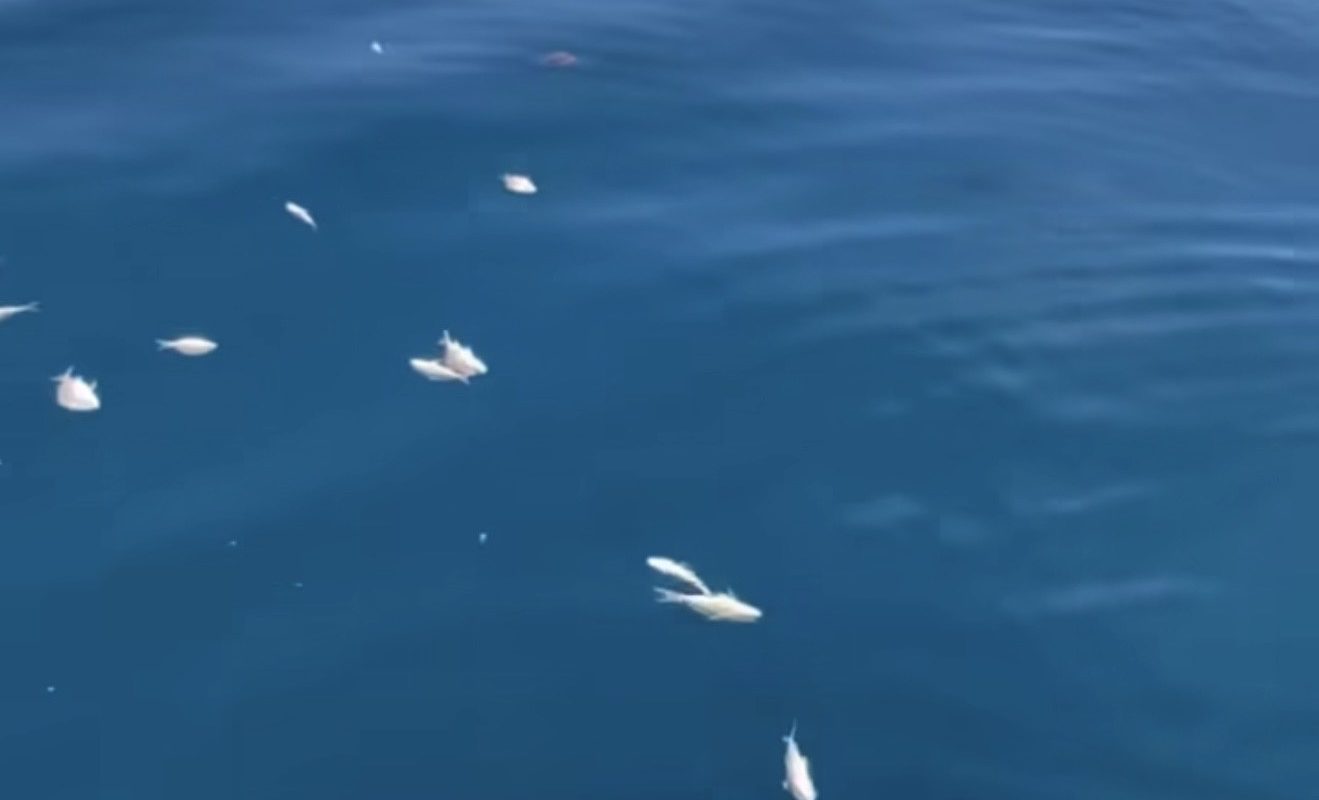

A video capturing hundreds of dead fish floating off the coast of Great Barrier Island has gone viral today, amassing thousands of responses and reigniting a fierce debate over commercial fishing practices in the Hauraki Gulf. The footage, captured by well-known recreational fisher and “Wettie” founder Darren Shields, shows a “carpet” of dead marine life drifting in the wake of what appears to be a commercial trawler. The incident comes at a time of heightened tension following recent reforms to the Hauraki Gulf Marine Protection Bill.
In the video, Shields and his companions navigate through a sea of dead fish, expressing visible dismay at the scale of the waste. Shields describes the scene as ‘atrocious’, pointing out beautiful boarfish and juvenile snapper that have been left to die. He notes that the fish are too small for commercial use and are simply discarded. “You can’t tell me, Shane Jones, that that is good,” Shields says in the recording, directed at the Fisheries Minister. “There is no form of this that is any good.”

The footage identifies several species discarded as “by-catch”—fish caught unintentionally while targeting other species. Because many of these fish are under the legal size limit or have no commercial value, they are often dumped back into the ocean, usually already dead or dying from the pressure of the nets.
This public outcry follows the momentum of the One Ocean protest that made headlines in November 2025 with a massive protest where a convoy of over 500 vehicles towing boats and jet skis crossed the Auckland Harbour Bridge in a 30km journey from Albany to Mission Bay. The group formed in response to late-stage amendments to the Hauraki Gulf Marine Protection Act, which allowed commercial ring-netting to continue in two of the twelve new High Protection Areas. Their core message, was ‘if an area is designated for protection, the rules should apply to everyone equally’.
Advocacy group LegaSea has been vocal in its warnings about the state of the Gulf, calling the reforms to the Hauraki Gulf / Tīkapa Moana Marine Protection Bill a ‘scam’ and arguing the bill doesn’t address the root causes of depletion. LegaSea has highlighted that since cameras were installed on some commercial vessels, reported discards of species like snapper have increased significantly, revealing the true scale of industrial waste. They argue that the Hauraki Gulf is collapsing and that allowing any commercial extraction in protected zones prevents the seafloor from ever truly recovering.