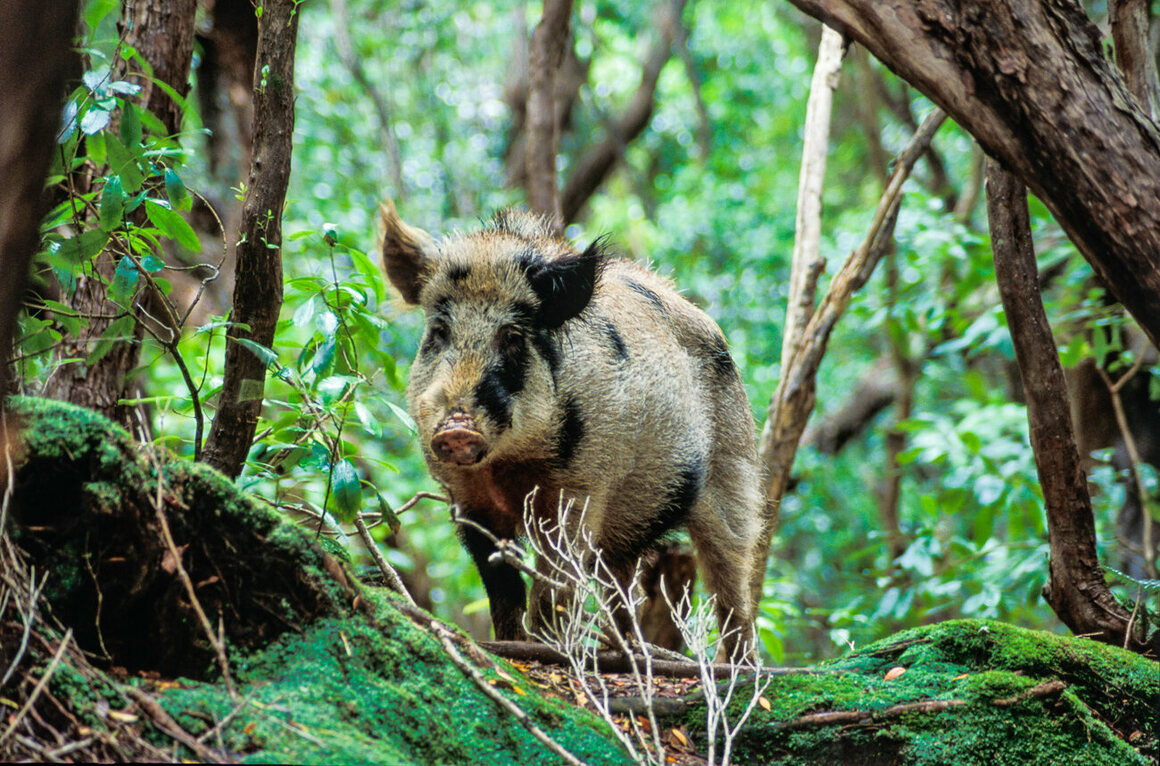

The Department of Conservation has confirmed plans for a community pig hunt on Great Barrier Island in July 2026, after wild pigs were reportedly tabled as a priority issue for the newly-elected Local Board.
Four of the five board members elected in October are reportedly in favour of stronger pig control measures, while board member Nikki Watts told AoteaGBI.news / The Barrier Times she supports a collaborative, hunter-led approach rather than eradication.

“Personally I wouldn’t support eradication, but a cull, or management, is quite different,” Watts said. “What I did suggest is the pig hunters work together to promote a hunting event.”
The discussion reflects differing views on the island about how feral pigs should be managed. DOC and Auckland Council appear to have taken a softer approach for now, with the planned Matariki Pig Hunting Competition set to reduce numbers, support hunting activities, and connect iwi and the community with conservation. The event will also include a pork cooking competition, community hāngī, and education activities, and will coincide with the proposed niho taniwha translocation from Auckland Zoo to Aotea.
Wild pigs on Aotea are formally classified as pests under Auckland Council’s Regional Pest Management Plan (RPMP) 2020–2030, and are included in a region-wide programme that allows for control at priority biodiversity sites. Council said there are currently no pig control programmes in place on Aotea.

“Feral pigs are a significant environmental threat, eating indigenous plants and animals, causing substantial ground disturbance, and spreading other pests such as kauri dieback disease and weed seeds,” said Dr Imogen Bassett, Head of Natural Specialist Services at Auckland Council. “We also acknowledge that feral pigs can be a valued hunting resource for both kai and recreation, and a wide range of views are held on this topic amongst the Aotea community.”
Bassett said the current RPMP does not include specific pig control programmes for the island, reflecting feedback received from mana whenua and residents when the plan was drafted. The council is reviewing the plan, with a new version due to come into effect in 2030, and public consultation on feral pigs is expected in early 2027.
Feral pigs have been popular with hunters and settlers alike for generations, valued as a food resource and for recreational hunting. They are the only wild animal permitted for hunting on the island, with no deer, goats, or possums present, and landowners remain responsible for decisions about pig control on their own properties. It remains illegal to release or move pigs anywhere in the Auckland region.
DOC said pig control is not currently one of its operational priorities on Aotea, but recognised the damage pigs can cause if numbers rise. Fletcher Beazley, Operations Manager at DOC, said the department’s focus is currently on feral cats and rats at Hirakimatā and Te Paparahi, and pest plants on Rakitū and the Mokohīnau Islands, work aimed at protecting threatened species including the tāiko/black petrel.