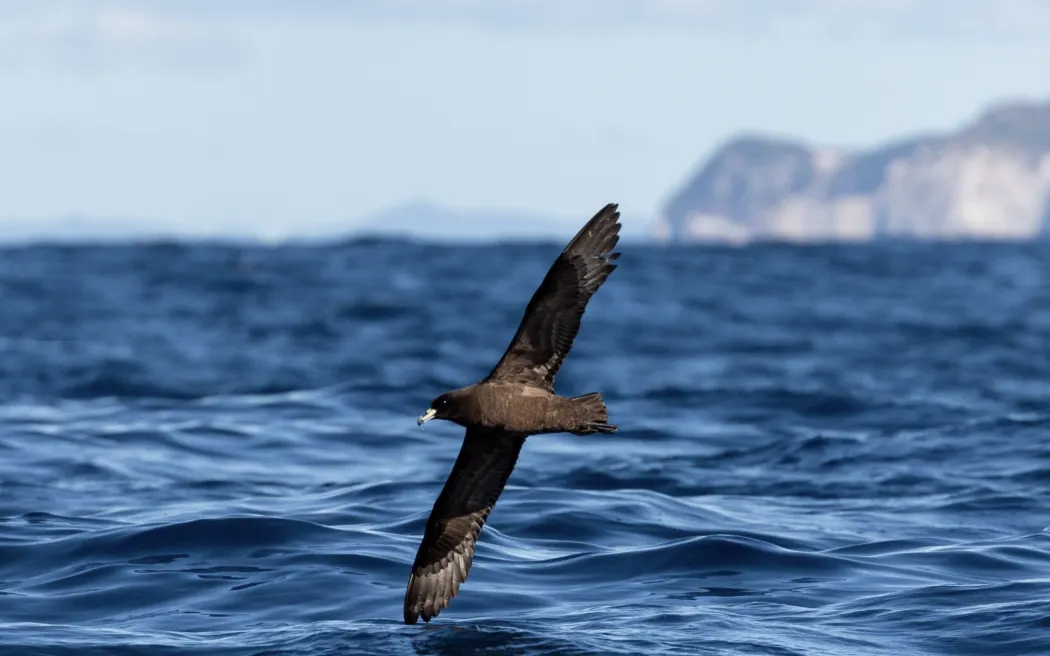

Great Barrier’s endangered Black Petrels are getting a major boost, with a new three-year programme aimed at improving chick survival and strengthening the local population. With just 5,000 breeding pairs remaining, scientists hope unprecedented tracking and monitoring will give these ocean-going birds a fighting chance.
The initiative is being led by the Live Ocean Foundation, with funding support from the BNZ Foundation. Half of the NZ$600,000 partnership is directed specifically to protecting the Black Petrel, enabling scientists to expand their work on fledgling tracking and chick survival.

“There’s never been a better time to get behind the exceptional researchers working to ensure precious species like the tākoketai are not lost, and for all New Zealanders to get to know the Black Petrel a little better,” said Live Ocean co-founder Peter Burling.
The funding comes at a pivotal moment for the Gulf. Recent marine protection measures have increased safeguarded waters from less than 1 percent to nearly 6 percent, offering a rare chance to protect the birds both at sea and on land. “We need to continue this momentum, working towards a future where biodiversity is being sustained and supported,” Burling added.
Watching the chicks
Ecologist Biz Bell has studied Black Petrels for more than 30 years. Supported by Ngāti Rehua as kaitiaki and by the Department of Conservation’s Conservation Services Team, she leads fieldwork around Great Barrier and Little Barrier’s breeding colonies.

“It will allow us to focus on tākoketai chicks and to understand the risks they face once they leave the island,” Bell said. “Tracking more chicks than ever before on their migration across the Pacific into South American waters will give us unprecedented insights on their behaviour en route and in their wintering grounds off Ecuador.”
Only around 10 percent of fledglings currently return to breed. Bell hopes the new data will help improve survival rates and ultimately increase the number of birds coming back to the island.
“It’s about more than just one species,” she added. “The Black Petrel is a sentinel species. How they fare tells us about the health of the wider ocean ecosystem.”
Community backing
The BNZ Foundation is matching public donations for GPS trackers, up to NZ$25,000, to help fund the technology needed to follow the birds on their trans-Pacific journey. Live Ocean co-founder Blair Tuke said support from organisations like BNZ is vital.
“We’re really proud to announce that the BNZ Foundation is joining the Live Ocean whānau as a flagship supporter. Support from organisations that share our ambition is absolutely vital,” Tuke said.
Fieldwork is scheduled to ramp up in January 2026, with chick banding and GPS tracker fitting planned for April. The long-term aim is to restore Black Petrels to historic breeding sites across the North Island, while maintaining a thriving population on Great Barrier and Little Barrier – the only places they currently breed.
“This project isn’t just about saving a bird,” Bell said. “It’s about sustaining an entire ecosystem, from the forest ridges to the waters of the Hauraki Gulf.”